


April Fools' Day pranks fade away, but fraudsters keep targeting busy employees year-round.
Springtime marks a surge in cyberattacks—not due to careless teams, but because everyone's juggling tasks and distractions.
During this hectic season, deceptive scams blend seamlessly into daily workflows, catching even vigilant staff off guard.
Below are three active scams that cleverly exploit hardworking employees trying to stay productive.
As you review these, consider: Would my team reliably spot each threatened trap before it's too late?
Scam #1: Fake Toll or Parking Fee Alerts
An employee receives a text:
"You owe $6.99 for unpaid tolls. Pay within 12 hours to avoid penalties."
The message cites an authentic local toll system—E-ZPass, SunPass, FasTrak—and the fee seems minor enough to ignore suspicion.
Pressed between meetings, they tap the link and settle the charge—except the link is fraudulent.
In 2024, the FBI recorded over 60,000 complaints about bogus toll texts, surging 900% in 2025. Hackers have crafted over 60,000 fake domains mimicking official state toll sites, underscoring this scam's profitability. Some victims are even from states without toll roads.
Why it works: a small fee and familiar scenario lull people into a false sense of security.
Defense tip: Real toll agencies never ask for immediate payment via text links. Instruct staff to access official websites or apps directly, never respond to texts—even replying "STOP" confirms active numbers and invites more scams.
Prioritize process over convenience to block these threats.
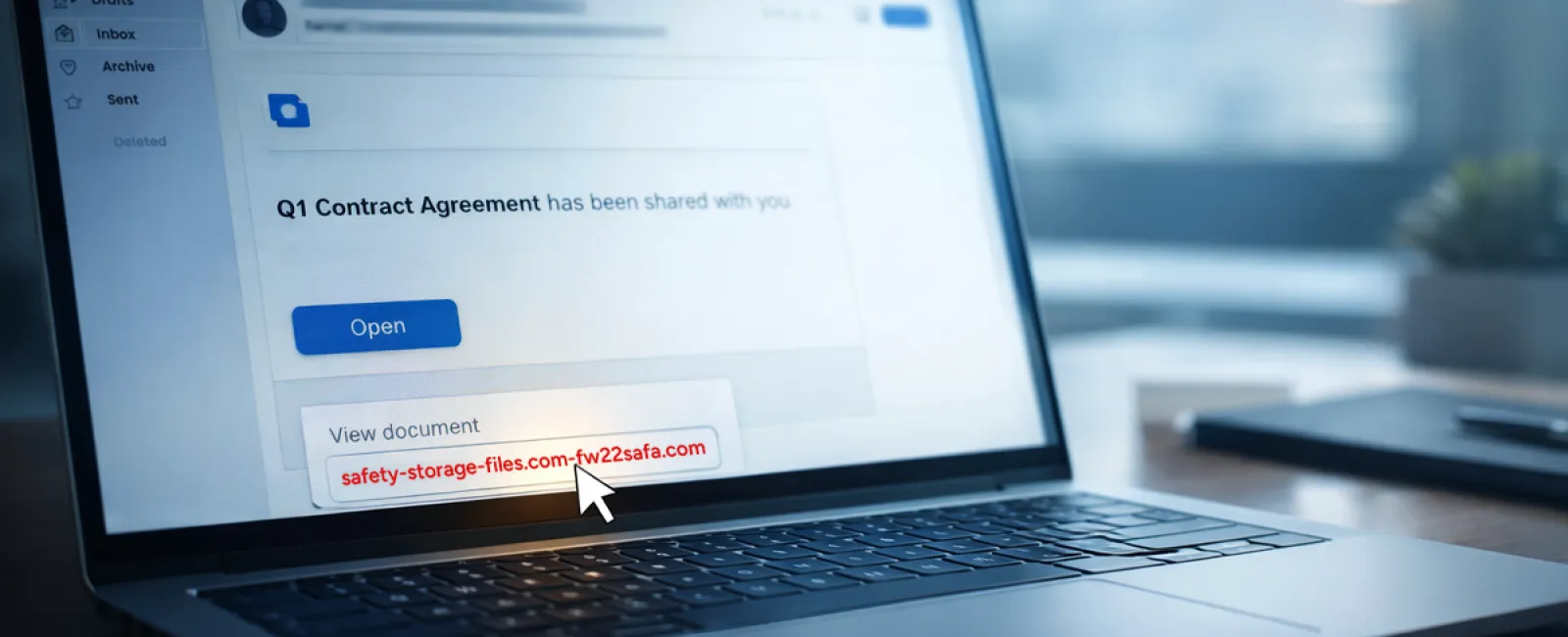
Scam #2: Fraudulent "Your File Is Ready" Emails
This scam perfectly mimics common workplace communications.
Employees get emails claiming shared files—contracts via DocuSign, spreadsheets in OneDrive, or documents in Google Drive.
Senders appear genuine, layouts are identical to trusted notifications.
Clicking prompts a fake login page. When credentials are entered, attackers gain access to company cloud resources.
Phishing using trusted platforms jumped 67% in 2025, with Google Slides phishing soaring over 200% in six months.
Employees are seven times more likely to click malicious links from familiar platforms than random emails, increasing risk.
Attackers even use compromised accounts to send real-looking notifications from official servers, bypassing spam filters.
Protection strategy: Train employees to ignore unexpected file-share emails. They should log in directly via the platform's website to verify files. IT teams can reduce risk by restricting external sharing and enabling alerts for suspicious logins.
A simple habit that significantly boosts security.
Scam #3: Highly Convincing Emails Crafted by AI
Gone are the days of obvious phishing errors.
A 2025 study revealed AI-generated phishing emails achieve a 54% click rate—over four times that of human-written scams—because they perfectly mimic company names, roles, and workflows pulled from LinkedIn and websites.
These messages target specific departments: fake employee verifications to HR, vendor payment alerts to finance. One test showed 72% of employees engaged with vendor impersonation emails, 90% higher than average phishing.
The emails are professional, calm, and urgent without dramatics—appearing like normal business communication.
Security tip: Verify any requests involving credentials, payments, or sensitive info through a separate channel—call, chat, or in person. Teach staff to check sender email domains by hovering before clicking and treat urgency itself as a red flag.
Effective security doesn't rely on fear but on smart verification.
The Core Issue
These scams exploit familiarity, authority, timing, and the assumption of quick action.
The real weakness isn't careless employees, but systems that expect perfect vigilance under pressure.
If one rushed click can cause harm, it's not a people problem—it's process failure.
Fortunately, process weaknesses can be fixed.
How We Support You
Business owners don't want another distracting project or to become security teachers.
They want peace of mind that their business stays protected without constant worry.
If you're concerned about your team's exposure—or know someone who should be—we're here to help.
Book a clear discovery call where we'll discuss:
- Current risks facing businesses like yours
- How everyday activities open doors to threats
- Practical steps to reduce vulnerabilities without slowing workflows
No pressure, no fear tactics—just open conversations and options to strengthen your defenses.
Click here or give us a call at 314-993-5528 to schedule your free 10-Minute Discovery Call.
Not for you? Please forward this to someone who could benefit. Sometimes knowing what to watch for turns a near miss into a blocked attack.


