


Imagine being three hours into a five-hour holiday drive when your daughter asks, "Can I play Roblox on your work laptop?" That laptop holds sensitive client files, financial records, and full access to your business. You're tired, still have a long drive ahead, and keeping her entertained seems tempting. But what risks come with this choice?
Holiday travel introduces unique security challenges that don't exist in your everyday routine. Distractions, fatigue, unfamiliar WiFi, and juggling family time with work "check-ins" create vulnerabilities. Whether traveling for business, leisure, or both, here's how to safeguard your data while enjoying the season.
Your 15-Minute Holiday Security Checklist Before Departure
Spend just 15 minutes prepping your devices to avoid complications later:
Essential Device Preparations:
- Install all available security updates immediately
- Back up critical documents securely to the cloud
- Set your screen to lock automatically after two minutes or less
- Enable "Find My Device" features on laptops and smartphones
- Fully charge portable power banks beforehand
- Bring your personal charging cables and adapters to avoid last-minute hassles
Discuss Digital Boundaries With Your Family:
- Clarify which gadgets kids may use and which should remain off-limits
- Provide a shared family tablet or secondary device solely for entertainment
- Create restricted user accounts on your laptop if children must access it
Expert tip: Instead of handing over your work device, bring a tablet unconnected to your business accounts. Investing around $150 in a standalone iPad can prevent costly security breaches.
Hotel WiFi Safety: Avoiding Common Pitfalls
Upon checking in, every family member eagerly connects their devices to hotel WiFi—streaming videos, checking emails, and managing work tasks alike. But here's the catch: hotel networks are shared by many guests, some with malicious intent.
True story: A family unknowingly joined a fraudulent network impersonating their hotel's WiFi. For two days, login credentials, payment information, and emails were intercepted.
Smart tips to protect your connection:
Confirm the network name: Always get the exact WiFi name from the front desk—never guess.
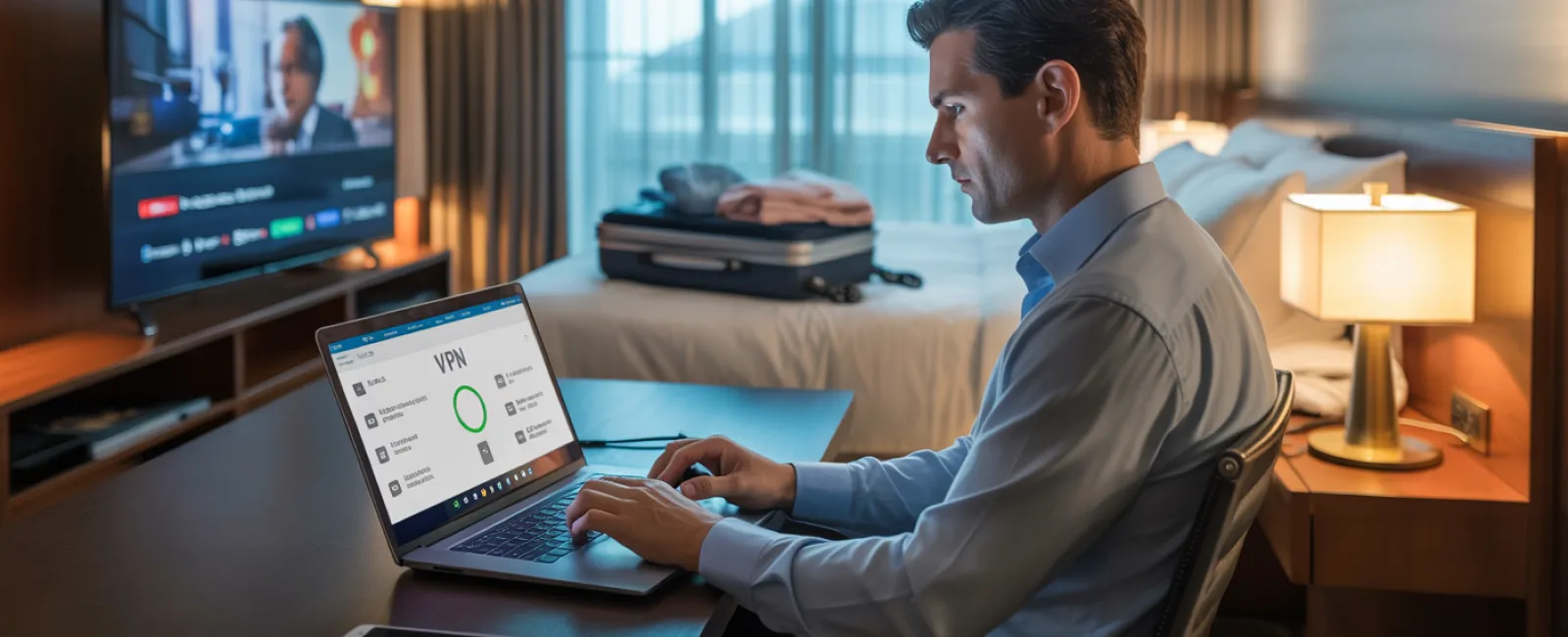
Use a VPN for work-related access: Encrypt your connection whenever you check email or handle company files.
Switch to your phone's hotspot for sensitive activities: Banking, client info, or confidential data should never be used on shared hotel networks.
Separate entertainment from work: It's fine if kids stream cartoons on hotel WiFi, but for business, stick to protected connections like your hotspot.
Handling Requests to Use Your Work Laptop
Your work laptop holds everything vital—emails, bank accounts, client files, and business apps. Kids wanting to watch videos or play games on this device can unintentionally create security risks.
Why this matters: Children might accidentally download malware, click unsafe pop-ups, share passwords, or forget to log out. These innocent actions can jeopardize your entire system.
How to manage these situations effectively:
Say no to work device sharing: Politely explain, "This laptop is for work only. You can use [another device] instead." Consistency is key.
If sharing is unavoidable:
- Set up a limited, separate user account
- Monitor their activities closely
- Disable downloads and installation capabilities
- Never save their passwords on your device
- Clear browsing history promptly after use
Better yet: Travel with a dedicated family device—an old tablet or laptop that's disconnected from work systems.
Streaming on Hotel TVs: The Importance of Logging Out
Family movie nights at the hotel are great—until someone logs into your Netflix or streaming account on the smart TV and forgets to log out before checkout.
The risk: The next guest gains access to your streaming service and, worse, if you reuse passwords, they might exploit other accounts.
How to avoid this issue:
- Use your personal device to cast content to the TV—safer and under your control
- Set a phone reminder to log out before leaving
- Download shows onto your devices beforehand to skip hotel TVs completely
Never log the following into hotel TVs:
- Banking and financial apps
- Work-related accounts
- Email services
- Social media platforms
- Any app containing saved payment details
Lost Devices: Immediate Actions to Take
Travel chaos often leads to misplaced or stolen devices. If your device goes missing, act fast:
Within the first hour:
- Use "Find My Device" to locate it immediately
- If retrieval isn't possible, remotely lock the device
- Change passwords for all critical accounts via another device
- Contact your IT team or Managed Service Provider to revoke business system access
- Notify stakeholders if sensitive business information was exposed
Devices should have these features enabled before travel:
- Remote tracking and locking
- Strong password protection
- Automatic data encryption
- Capability to wipe data remotely
If a family member loses a device, apply these steps immediately to secure it.
Rental Car Bluetooth: Protecting Your Data
Connecting your phone to a rental car's Bluetooth is convenient but risky. The vehicle stores contacts, recent calls, and even message previews, which often remain accessible after you return the car.
Quick 30-second security checklist before returning your rental:
- Delete your phone from the car's Bluetooth settings
- Clear any recent GPS destinations
- Or avoid connecting entirely by using an auxiliary cable
Balancing Work and Vacation: Setting Boundaries
Despite your best intentions for family time, you find yourself checking email constantly, taking calls, and working while others enjoy the mini-golf. This split focus reduces security awareness, leading to careless clicks or unsafe network connections.
Here's how to protect yourself while staying somewhat connected:
- Limit work email checks to two scheduled times per day
- Use your phone's hotspot instead of hotel WiFi for work tasks
- Conduct work in private spaces like your hotel room, away from public view
- Be fully present with family when not working
The best security approach? Take real time off. Your business will survive a week without you, and you'll return more alert and secure.
Adopt a Smart Security Mindset This Holiday Season
Juggling work and family during holiday travel is tricky. Sometimes kids need your laptop, or you must handle urgent work while on the road. The key isn't perfection—it's managing risk intentionally.
- Prepare all devices before you travel
- Know which activities carry high risk (e.g., banking over hotel WiFi) and which don't (e.g., checking email via hotspot)
- Create clear barriers between work data and family entertainment
- Have a solid response plan for security incidents
- Learn to say, "Not on this device," and stick to it
Make Your Holiday Secure and Stress-Free
The holiday season should be about making memories, not managing data breaches or explaining security lapses to clients.
With a bit of preparation and adherence to a few security guidelines, you can keep your business safe without spoiling the holiday spirit. Your family enjoys quality time, your business stays protected—everyone wins.
Need assistance creating travel security protocols for yourself and your team? Click here or give us a call at 314-993-5528 to book a free 10-Minute Discovery Call with us.We'll help you create practical policies that protect your business without making travel impossible.
Because the best holiday story should never be, "Remember when Dad's laptop got hacked?"


