


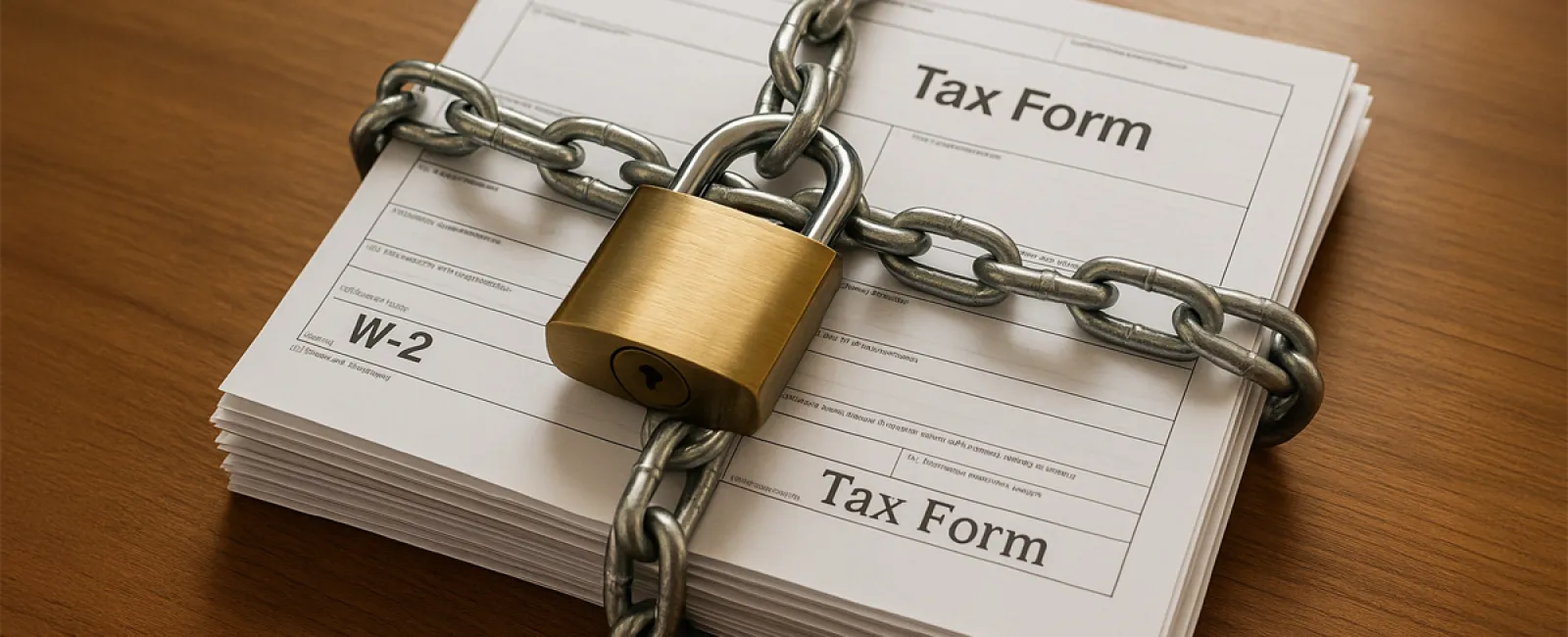
February signals the hectic arrival of tax season. Accountants grow busier, bookkeepers gather vital documents, and everyone's focus shifts to W-2s, 1099s, and looming deadlines.
But here's the hidden hurdle no calendar blocks off: the first real headache of tax season is often not a form—it's a clever scam.
One particularly sneaky con surfaces well before April's tax deadlines. It's simple, convincing, and targets small businesses directly. Chances are, such a scam might already be lurking in someone's inbox.
Understanding the W-2 Scam: The Method Behind It
Here's the scenario:
Your payroll or HR staff member receives an email that appears to come from the CEO, owner, or a high-ranking executive.
The message is brief but urgent:
"I need copies of all employee W-2s for an upcoming meeting with the accountant. Please send them immediately; I'm swamped today."
The tone is plausible and the timing makes sense during tax season. The request seems entirely reasonable.
Consequently, your employee emails the W-2s.
But here's the catch: the email is a forgery, sent by a cybercriminal using a forged address or a deceptively similar domain.
Now, the criminal gains access to sensitive details for every employee:
• Full legal names
• Social Security numbers
• Home addresses
• Salary data
All the critical information needed to commit identity theft and fraudulently file tax returns before your employees can.
The Fallout: What Comes After
Typically, victims discover the attack when:
Employees attempt to file their tax returns and face rejection: "Return already filed for this Social Security number."
Someone has already filed using their identity and claimed the refunds.
This triggers a cascade of issues—dealing with the IRS, setting up credit monitoring, identity theft protection, and enduring months of bureaucratic hassle for a mistake they never realized occurred.
Multiply this by entire payrolls and imagine explaining to your team how a fake email led to a breach of their personal data.
This isn't just a security slip-up. It's a trust breach, an HR crisis, a potential legal liability, and a damage to your company's reputation.
Why the W-2 Scam Is So Effective
This isn't a clumsy scam from a foreign prince. It looks authentic on first glance.
It works because:
The timing is spot on—W-2 requests are expected in February, raising no immediate suspicions.
The request itself is logical—unlike suspicious demands for money or gift cards, W-2 data legitimately gets exchanged during tax season.
The urgency fits perfectly—a busy office owner asking for prompt action doesn't arouse doubt.
The sender address seems genuine. Attackers do thorough research, mimicking CEO or accountant names and domain formats.
Employees naturally want to assist the boss, which can cause them to overlook verification steps when urgency strikes.
Proactive Protection: Shield Your Business Before the Scam Strikes
The silver lining: this scam is preventable. It relies more on policy and company culture than advanced technology.
Implement a firm "no W-2s via email" policy. Without exception, sensitive payroll documents should never be sent as email attachments. Even if the request appears to come from the CEO, the answer must be no.
Any request for sensitive information should be verified through a separate channel—phone call, face-to-face, or internal chat. Never reply directly to the suspicious email. Use known contact information, not numbers in the message. Taking 30 seconds here can save months of cleanup.
Host a quick 10-minute briefing on tax-related scams immediately. Don't delay until the peak of tax season. Alert payroll and HR teams on what scams look like and the procedures to follow. Awareness is one of the best defenses.
Strengthen security on payroll and HR systems by enforcing multi-factor authentication (MFA) on all access points handling employee data. MFA acts as a crucial barrier even if credentials are compromised.
Encourage a company culture that values verification. Employees who double-check suspicious requests—even from executives—should be commended, not criticized. When questioning is standard practice, scams struggle to penetrate.
These five simple rules can be implemented within a week and create a strong shield against initial waves of scams.
Looking Beyond: The Full Landscape of Tax Season Threats
The W-2 scam is only the beginning.
Between now and April, expect an onslaught of tax-focused cyberattacks including:
• Fraudulent IRS notices demanding immediate payments
• Phishing messages disguised as updates for tax software
• Spoofed emails claiming to be from your accountant, containing dangerous links
• Bogus invoices timed to appear as legitimate tax expenses
Cybercriminals exploit tax season because people are distracted, deadlines loom, and financial requests feel routine.
Businesses that navigate tax season unscathed aren't just lucky—they're armed with solid policies, training, and systems that catch scams before they escalate.
Is Your Business Prepared to Face Tax Season Threats?
If your organization has clear policies and your teams are trained to identify scams, you're already ahead of many small businesses.
If not, now is the critical moment to act—don't wait until after you experience a costly breach.
Consider scheduling a complimentary 15-minute Tax Season Security Check.
During this session, we will evaluate:
• Payroll and HR system access and MFA use
• Your W-2 data verification protocols
• Email security measures preventing spoofing
• The vital policy adjustment most businesses overlook
Even if your business is already secure, you probably know others who could benefit. Sharing this information might save a fellow business owner from severe consequences.
Click here or give us a call at 314-993-5528 to schedule your free 10-Minute Discovery Call.
Because tax season is demanding enough—don't let identity theft add to the stress.


